
Preventing Water Damage Before It Spreads
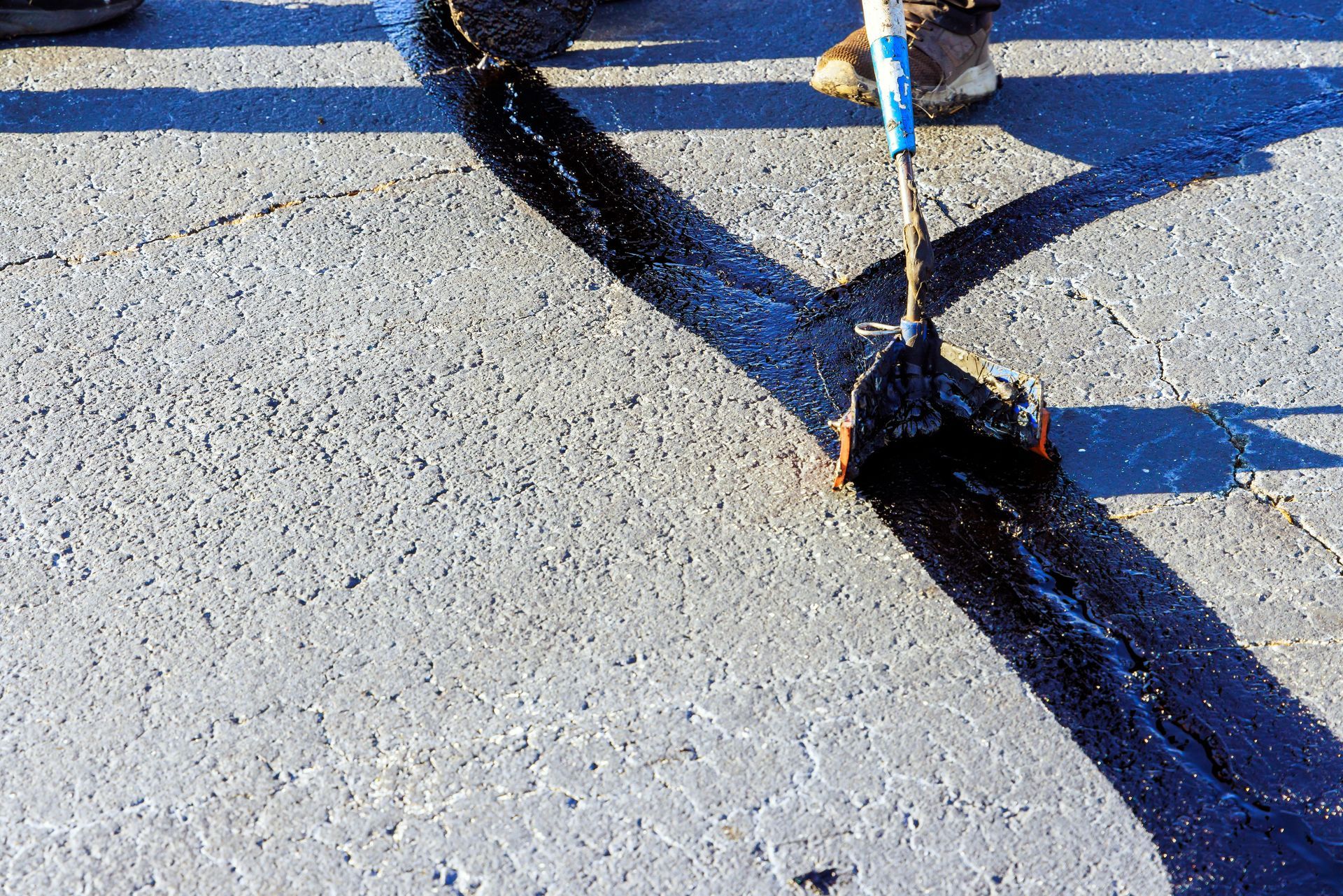
Crack Sealing in Carson City for pavement showing linear cracks from seasonal temperature stress
Cracks in asphalt pavement act as entry points for water that erodes the aggregate base and creates conditions for freeze-thaw damage during the winter months. A Plus Sealing LLC addresses these failures by cleaning out the crack cavity, removing loose debris and failed filler material, and applying hot rubberized sealant that bonds to the pavement edges and remains flexible through temperature changes. This process stops a minor surface crack from becoming a structural failure that requires removing and replacing entire sections of pavement.
The work prevents deterioration from accelerating. Once water reaches the base layer beneath the asphalt, it softens the compacted aggregate during wet periods and expands during freezing, pushing the pavement apart from underneath. What starts as a hairline crack widens into a gap that admits more water, creating a feedback loop where each winter makes the damage worse until the base fails completely and the surface collapses into a pothole.
Arrange a crack sealing inspection to identify which pavement sections need immediate treatment and which can be monitored for another season in Carson City, Reno, South Lake Tahoe, CA and surrounding areas.
Why Crack Sealing Works for Extending Pavement Life
Effective crack sealing requires routing the crack to create clean edges and a uniform depth that the sealant can fill completely. The cavity gets blown clean with compressed air to remove all loose particles, then hot sealant is applied to fill the space and bond to the pavement walls. The rubberized material stays flexible enough to move with the pavement as it expands in summer heat and contracts in winter cold, maintaining a watertight seal through the temperature cycles that originally caused the crack.
After sealing, the crack no longer admits water, so the base layer stays dry and maintains its structural integrity. You'll notice the pavement stops shedding loose material around the crack edges, and vegetation stops growing from the gap where seeds previously germinated in trapped moisture and soil. The sealed surface can be sealcoated as part of regular maintenance, with the crack treatment providing a stable foundation that won't reopen and compromise the protective coating layer.
Cost comparison strongly favors crack sealing over deferred maintenance. Sealing a linear crack costs dollars per foot, while repairing a pothole that develops from untreated cracking requires excavating several square yards of failed pavement, rebuilding the base, and installing new asphalt at ten to twenty times the expense of the original preventative treatment.
What Property Owners Usually Ask
Crack sealing raises practical questions about when intervention makes sense, how long repairs last, and what conditions cause cracks to form in the first place.
A Plus Sealing LLC provides crack sealing services for residential driveways, commercial parking lots, and roadway surfaces throughout Carson City. Schedule your crack inspection now at (775) 301-0397 to stop pavement deterioration before minor surface damage becomes a major structural repair.
What causes cracks to appear in pavement that was fine last year?
Carson City's temperature range creates daily expansion and contraction cycles that stress the asphalt, and once the binder oxidizes enough to lose flexibility, the pavement can no longer accommodate this movement without cracking, especially during rapid temperature drops in fall and spring.
How wide can a crack get before sealing no longer works?
Cracks up to half an inch wide can be sealed effectively with proper routing and filling, but wider failures often indicate underlying base problems or structural settling that crack sealing can't address, requiring patching or reconstruction instead.
Why do freeze-thaw cycles make crack damage worse?
Water that enters cracks expands roughly nine percent when it freezes, creating tremendous outward pressure on the pavement edges that forces the crack wider, and this process repeats every night during transitional weather when temperatures drop below freezing after daytime melting.
When should you seal cracks in a newly paved surface?
Any cracks appearing within the first year likely indicate installation problems like inadequate base compaction or poor joint construction, and these should be sealed immediately to prevent water damage while the rest of the pavement cures.
How long does crack sealant last before needing replacement?
Quality sealant in properly prepared cracks typically performs for three to five years in Carson City's climate before traffic wear and UV exposure degrade the material enough to require reapplication, though high-stress areas may need attention sooner.