
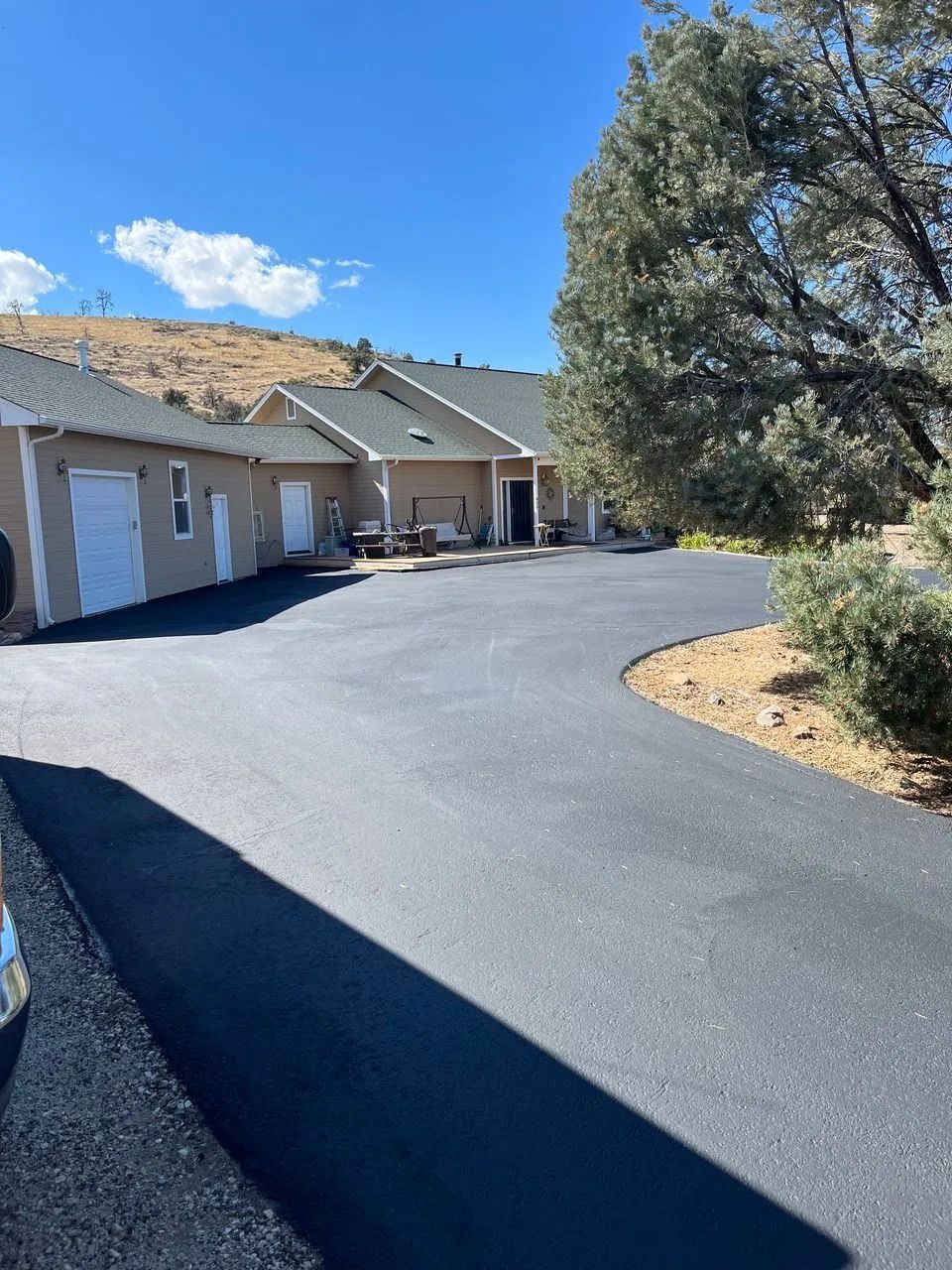
Driveways That Hold Up to Daily Use
Residential Asphalt Services in Carson City for driveways showing surface cracks and weathering damage
A Plus Sealing LLC handles residential asphalt maintenance across Carson City, Reno, South Lake Tahoe, CA and surrounding areas, focusing on the problems that show up in home driveways after years of temperature swings and vehicle traffic. You'll see cracks forming along the edges where water works its way underneath, or rough patches where the binder has oxidized and turned brittle. The work addresses those visible failures through sealcoating, crack sealing, and targeted repairs that restore a smooth, protected surface.
Residential asphalt deteriorates primarily from two forces: ultraviolet exposure that breaks down the petroleum binder, and water intrusion that erodes the base layer during freeze-thaw cycles. Sealcoating reintroduces a protective layer that blocks UV penetration and sheds water before it can migrate through cracks. Crack sealing stops existing damage from widening into structural failures that require full-depth patching.
Request a driveway evaluation to identify which surfaces need immediate attention and which can wait another season.
What Proper Asphalt Maintenance Requires
The preparation determines how long the repair lasts. Cracks get routed and cleaned to remove loose debris and old filler that no longer bonds to the pavement edges. Sealcoat only adheres properly when the surface is swept clean and fully dry, which means scheduling around Carson City's occasional summer thunderstorms and morning dew patterns that leave moisture on north-facing driveways longer than south-facing ones.
After the work finishes, you'll notice the driveway looks uniformly dark again instead of showing gray oxidized patches, and the surface feels smooth under tires rather than catching on raised crack edges. Water beads and runs off instead of pooling in low spots where it used to sit and soak through. The pavement stops shedding loose aggregate, so you're not sweeping gravel out of the garage every week.
Preventative maintenance costs a fraction of what you'd spend on removing and replacing deteriorated asphalt once the base layer fails. Sealcoating every two to three years keeps the binder intact, while annual crack sealing stops small failures before they become structural problems that require excavation and repaving.
What Homeowners Usually Ask
Residential asphalt projects raise practical questions about timing, durability, and what the finished surface will look like under real-world conditions.
A Plus Sealing LLC works with homeowners throughout Carson City to maintain driveways that handle daily traffic without accelerating toward expensive replacements. Schedule an estimate to review your property's current condition and determine which maintenance steps will extend pavement life most effectively.
How long does sealcoat need to cure before you can drive on it?
The surface dries enough for light foot traffic within four to six hours in warm weather, but vehicles should stay off for at least twenty-four hours to allow the coating to fully bond and harden without leaving tire marks.
What causes cracks to form in driveways that looked fine a year ago?
Carson City's temperature swings create expansion and contraction cycles that stress the pavement, while water infiltration during winter freezes and expands beneath the surface, pushing cracks apart from underneath.
Why does asphalt turn gray and rough over time?
Ultraviolet radiation breaks down the petroleum binder that holds the aggregate together, causing oxidation that turns the surface brittle and allows stones to work loose from the matrix.
When should you seal a driveway for the first time?
New asphalt needs six to twelve months to cure fully before applying sealcoat, giving the volatile oils time to evaporate and the surface time to harden enough to accept the coating without trapping moisture.
How do you know if a crack needs sealing or if the whole section needs replacement?
Cracks narrower than a half-inch that haven't caused the pavement to shift vertically can be sealed effectively, but wider failures with settling or heaving indicate base layer problems that require removal and reconstruction.